All posts by Living Streets Edinburgh

New Johnston Terrace Pavement – only 1.5m wide

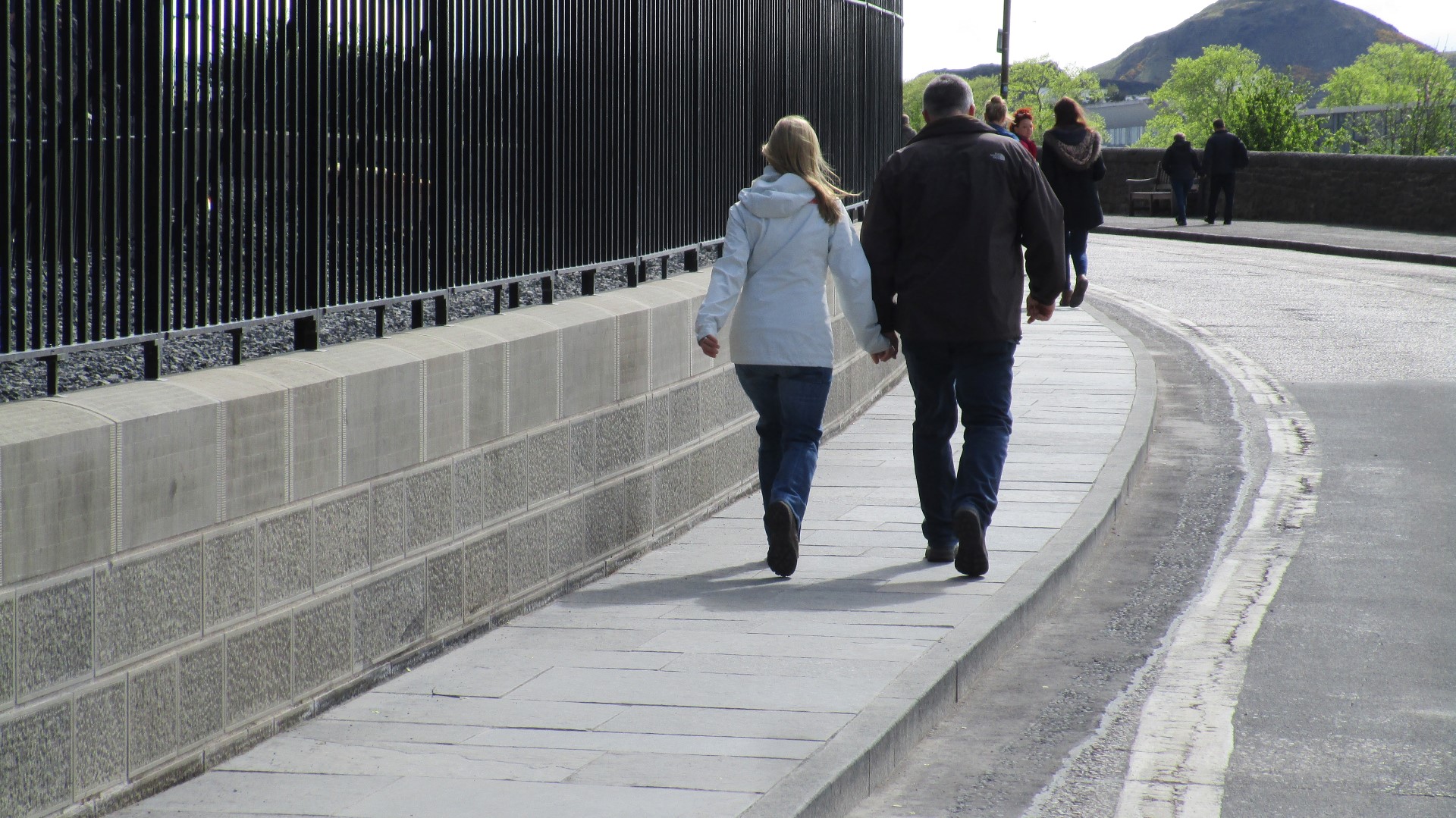
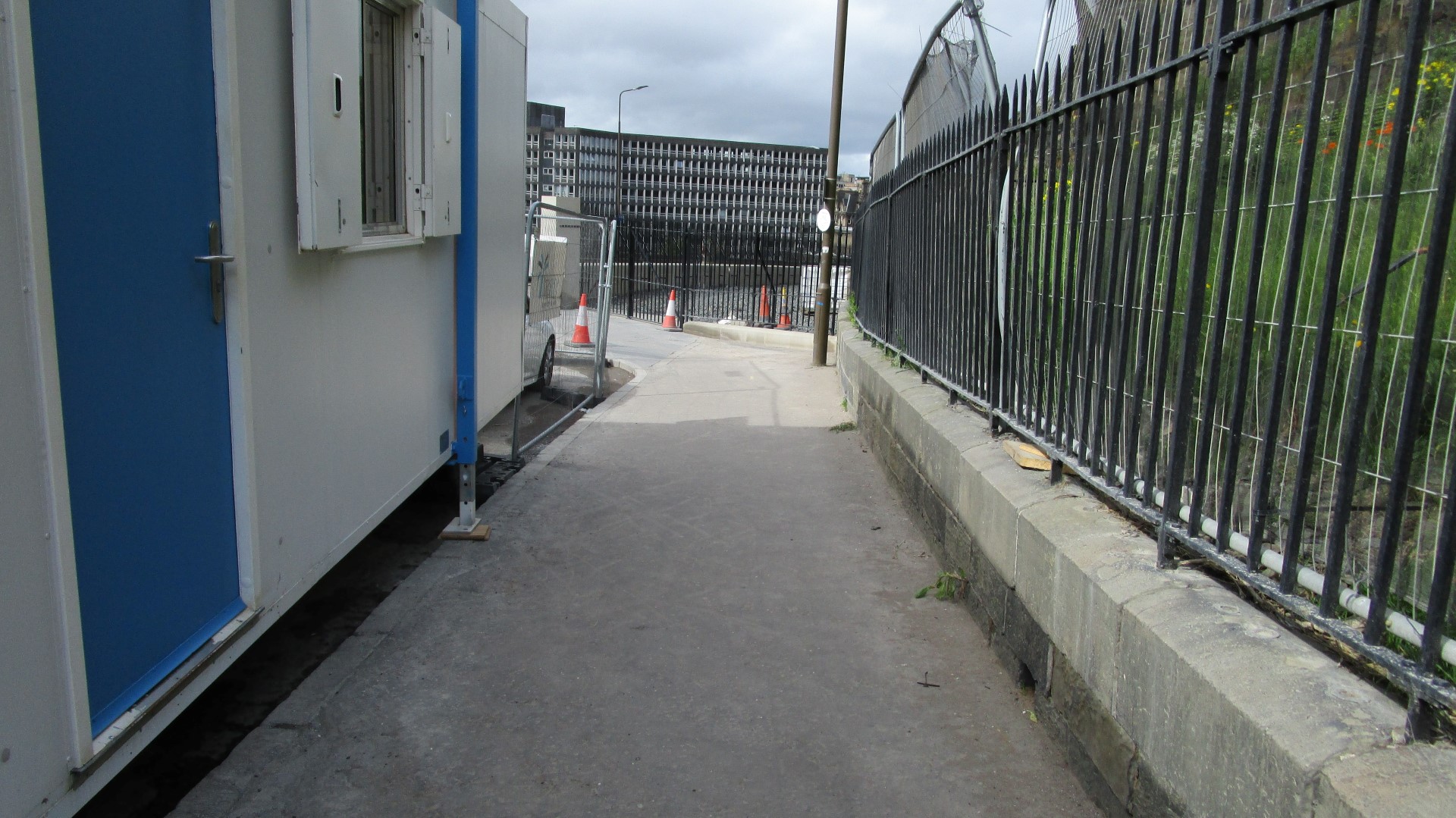
New-Narrow-Pavement-1We were appalled to see how narrow the pavement is on the Castle side of Johnston Terrace, after the works to install a ‘rock trap’ to catch falling rocks from Castle Rock were finished recently. The pavement is only 1.5 metres wide – well short of the 2.5 metre “absolute minimum” required by the Council’s own (excellent) Street Design Guidance.

Having looked into the history of this, it is almost as appalling to read the report to the Development Management Sub Committee 14 January 2015, which states

“Whilst this width is below that recommended in the council’s …guidelines it is considered, given the relatively low use of this footway, to be an be acceptable departure from standards in this instance. However as two wheelchairs or buggies will be unable to pass each other on a footway of this width the applicant was advised that uncontrolled crossing points on either side of the narrowing were required.”

We have raised this with the Council – not only the inadequacy of this pavement (which is far from “low use”) but also the wider issue of how keen the Council appears to be to ignore its own guidance.

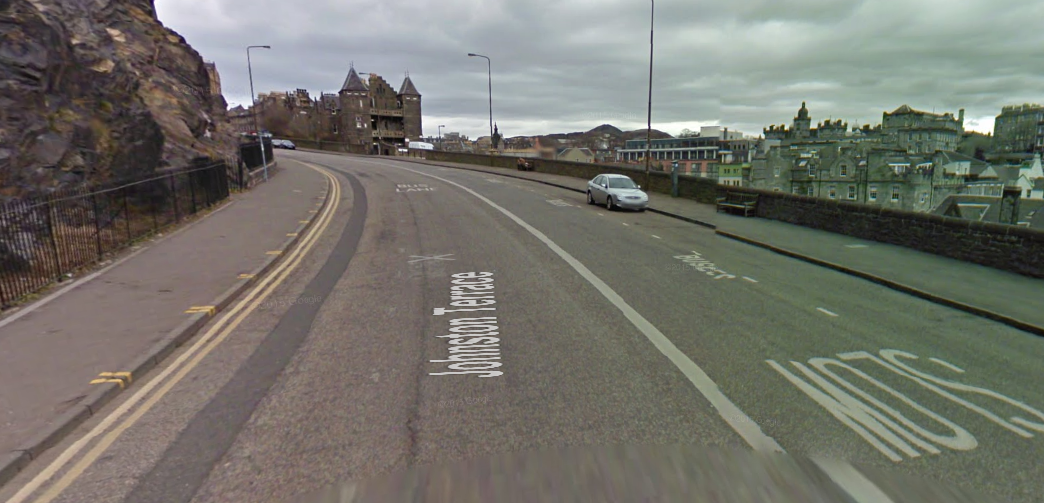
Before (Picture from Google Streetview)

Google-Streetview-Johnston-Terrace-2010

After


Existing-Path-BottomNew-Narrow-PathNew-Narrow-Pavement-1Rock-Trap-Top

New-Narrow-Pavement-2Existing-Pavement-Top

Annual Public Meeting – Tuesday 28 June

LSE-AGM-2016

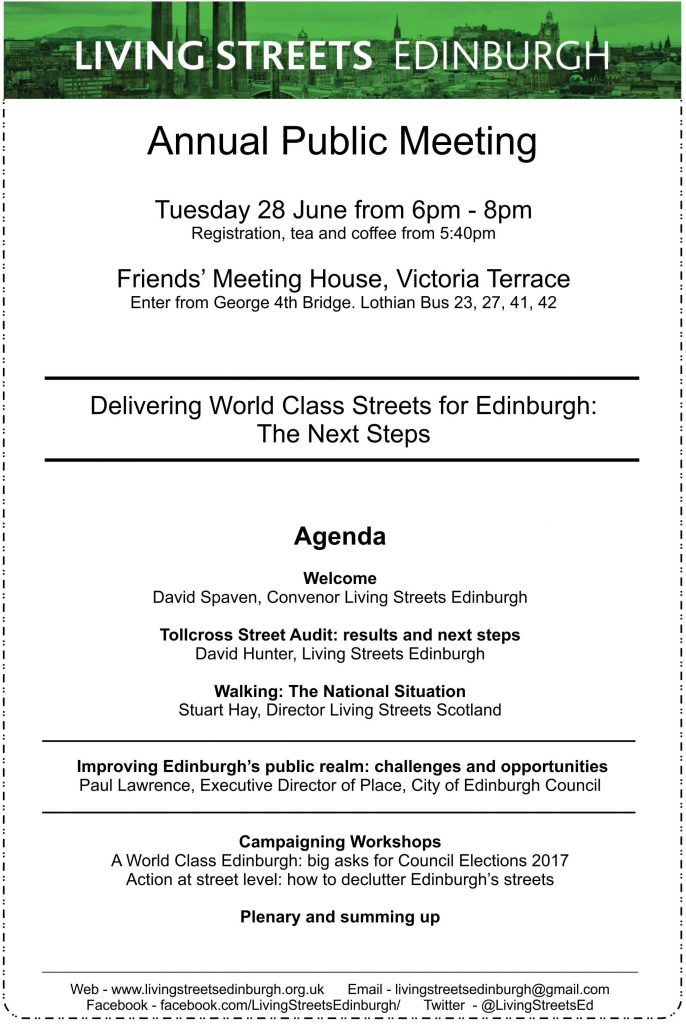
Living Streets Edinburgh Annual Public Meeting

Tuesday 28 June from 6pm – 8pm
Registration, tea and coffee from 5:40pm

Friends’ Meeting House, Victoria Terrace
Enter from George 4th Bridge. Lothian Bus 23, 27, 41, 42

Delivering World Class Streets for Edinburgh: The Next Steps

Agenda

Welcome – David Spaven, Convenor Living Streets Edinburgh

Tollcross Street Audit: results and next steps – David Hunter, Living Streets Edinburgh

Walking: The National Situation – Stuart Hay, Director Living Streets Scotland

Improving Edinburgh’s public realm: challenges and opportunities – Paul Lawrence, Executive Director of Place, City of Edinburgh Council

Campaigning Workshops
A World Class Edinburgh: big asks for Council Elections 2017
Action at street level: how to declutter Edinburgh’s streets

Plenary and summing up


Living Streets Edinburgh backs ‘floating bus stop’ pilot on Leith Walk

Living Streets Edinburgh Group are backing the overall direction of the City of Edinburgh Council’s proposals for the next phase of upgrade of the Leith Walk corridor, including the segregated cycle route. There are many benefits for everyday walking in the planned scheme as a whole.

We do have big concerns, however, about ‘floating bus stops’, with cyclists routed behind bus stops, thereby requiring pedestrians to cross the cycle route to access the bus stop.

Shrub-Place-Floating-Bus-Stop

This is especially the case on busy shopping streets and main public transport corridors.   Irrespective of any cycling /walking conflict-reduction measures, it will be very difficult to avoid at least some deterioration in the convenience and safety of walking, especially for older and disabled people. Routine conflicts of queuing pedestrians blocking lanes are bad for cyclists too. The problems of conflict are most acute on areas with shop frontages and limited pavement widths and around major bus stops such as those found on main streets like Leith Walk. However, we are keen to do what we can to help the broad aim of what CEC is proposing for Leith Walk, so:

a.       We will support a floating bus stop pilot on Leith Walk, provided that,

b.      it can be demonstrated in advance that the whole Leith Walk scheme will deliver a net improvement in walking convenience and safety, and,

c.       a package of design and regulatory measures to mitigate floating bus stop impact on pedestrians is put in place, and,

d.      there is full objective monitoring and evaluation of the floating bus stops (for pedestrians, bus users, cyclists, elderly/disabled people) and of the modal shift / safety outcomes of the Leith Walk scheme as a whole, and,

e.       the roll-out of further floating bus stops in Edinburgh is delayed until after the evaluation of the Leith Walk pilot.

We are also keen to see more formal and informal crossings of Leith Walk, integrated with the tram planning process.


Living Streets Edinburgh – backing the cycle route and protecting pedestrians

Some cycling campaigners have indicated that we are opposed to segregated cycle ways. This is categorically not the case. After walking most of the proposed Edinburgh East to West cycle route, and auditing the design, we have supported the vast majority of the proposal and recommended some detailed design improvements.  However, we have concerns about two sections of the route, due to impacts on the safety and convenience of walking.

The first concern is that Roseburn Terrace will not be able to accommodate a well-designed cycle bypass / floating bus stop which minimises conflicts with pedestrians queuing, alighting from or getting on buses. Conflicts of this nature will not be good for cyclists either.  So far, the experience of such infrastructure in the UK has not been good, especially TFL’s efforts in London, where Living Streets has observed significant problems at a number of busy high streets. We are especially concerned at the effect on elderly and disabled bus passengers who will not be expecting to encounter cyclists on alighting.

We have suggested an alternative route for this short section – which actually links better with the Family Friendly route through Roseburn Park. We also believe widening both pavements at Roseburn Terrace is a priority for improving the public realm and maximising active travel benefits. We suggest further work is needed with all parties on the design of this section of the route and are happy to work with cycling groups to understand their perspective and look at options which address our concerns.

Our second concern is that the east end of Princes Street proposal – running straight through the middle of the pavement – is highly problematic due to the sheer volume of pedestrians and the inevitable conflicts which would be created. We want to see re-allocation of road space to accommodate cycling and minimise conflicts.

We look forward to supporting the project as a whole and ensuring it maximises benefits to pedestrians as well as cyclists. Where there are problems, we will work constructively with other interests to resolve them.

Response: Roseburn-Leith Walk Cycle Route Consultation

Living Streets Edinburgh (LSE) campaigns for improved conditions for everyday walking in Edinburgh’s streets and public spaces.  Walking is the most important transport mode in the city, since over half of all journeys by Edinburgh residents are made either entirely on foot (35%) or by bus (18%), the latter involving a walking stage.  It is also the most socially inclusive mode – it’s as natural as breathing – and is critical to the city’s economy (including the important tourist sector).

1. Key principles

1.1  LSE is strongly supportive of measures to improve sustainable transport generally and will support segregated cycle routes where these do not adversely affect the safety and/or convenience of walking, and particularly where they provide general improvements to the walking environment as well. This is the case for the large majority of this route.

1.2  We have big concerns about ‘floating bus stops’, as – irrespective of any ameliorative measures – there will inevitably be some deterioration in the convenience and safety of walking, as pedestrians have to cross the cycle path from the pavement in order to access the bus stop. Our view is that no floating bus stops should be created in Edinburgh until after the evaluation of a pilot (with multiple safeguards) within the next phase of the Leith Walk upgrade (see separate submission to Anna Harriman at City of Edinburgh Council). Options to avoid these conflicts should be explored.

1.3  Walking in the city centre and bus use are closely linked. The impact of reduced bus priority needs to be considered in relation to journey times and air pollution impacts on pedestrians. We urge the council to view the project in a multi-modal context, which balances the needs of cyclists with bus users (as well as people on foot) – especially on busy bus routes.

Read the full response to the Roseburn to Leith Cycle Route here